


Disability‑Inclusive Climate Solutions: What Do We Know and What Is Needed?
The climate crisis does not affect everyone equally. For persons with disabilities, it compounds existing inequalities—deepening barriers to participation, access to services, livelihoods, and even survival. This reality was at the heart of the IDDC LS² on Disability‑Inclusive Climate Solutions, which brought together evidence, lived experience, and practical lessons from India, Nepal and Philippines .
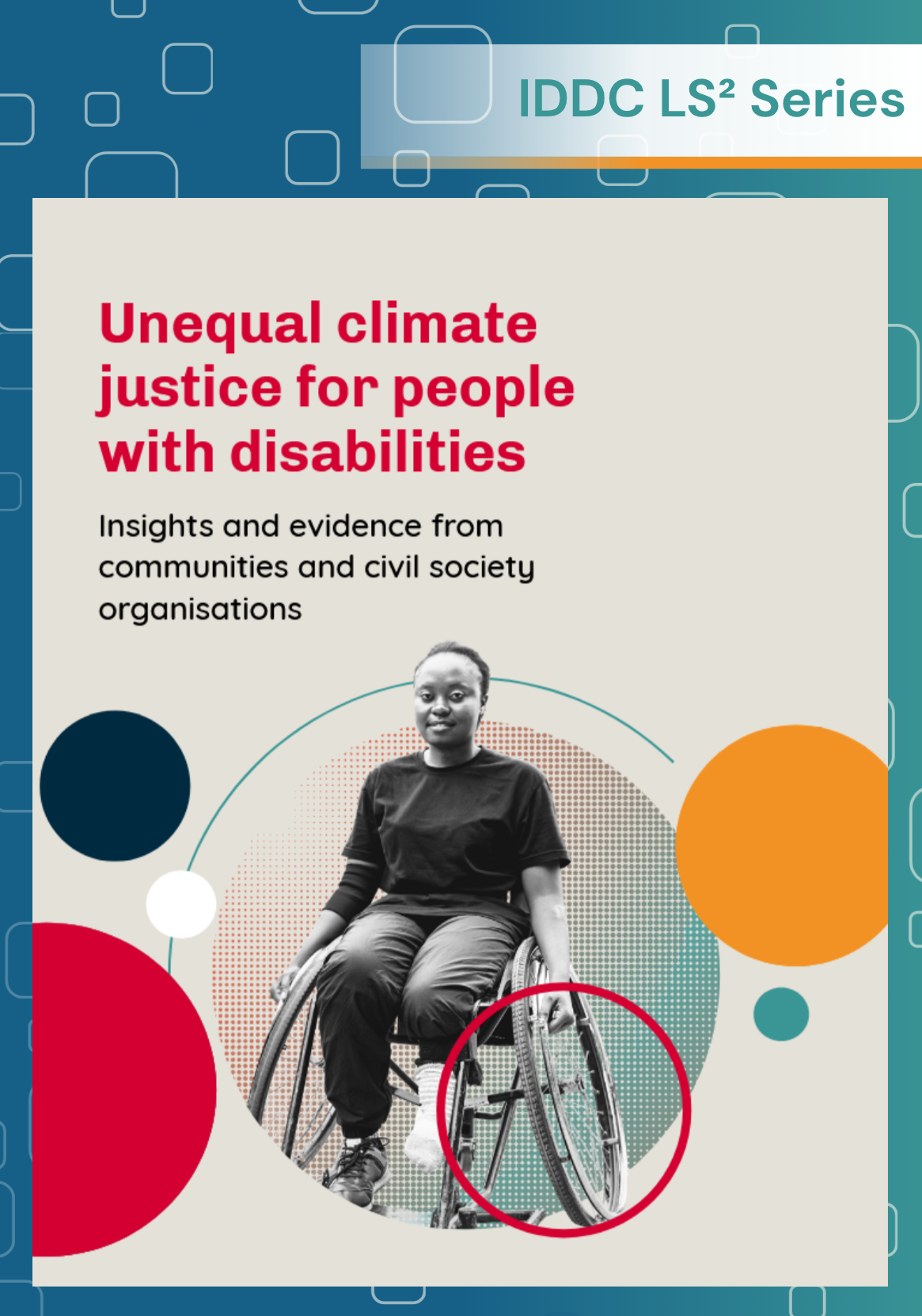
The session reviewed findings from a recent evidence‑based IDDC and Bond Disability and Development Group report “Unequal climate justice for people with disabilities” – led by a humanitarian and development steering group, with contributions from 32 organisations working in more than 38 countries, and explored what governments, donors, UN agencies, and practitioners must do differently to ensure climate action leaves no one behind.
Climate change as an inequality multiplier
Presenters emphasized that the climate crisis does not create new risks for persons with disabilities so much as amplify existing ones. Across contexts, people with disabilities face disproportionate impacts in diverse areas including:
- Food and nutrition, as livelihoods collapse under heat, drought, flooding, and environmental degradation
- Water and health, where inaccessible infrastructure and disrupted services become life‑threatening
- Education and housing, particularly in emergencies and displacement
- Social protection, which often fails to account for disability‑related needs during climate shocks
Despite this evidence, disability inclusion in climate action remains largely an afterthought, rather than a core design principle.
Five enablers for meaningful inclusion
The report identifies five essential enablers for disability‑inclusive climate action—elements that are consistently missing but critical for success:
- Data Disability‑disaggregated climate data is scarce. Decision‑making suffers when the impacts of climate change on persons with disabilities remain invisible. The report calls for strengthened national statistics and recognition of Organisations of persons with disabilities (OPD)‑generated data as a legitimate and valuable evidence source.
- Accessibility and reasonable accommodation Participation is impossible without accessibility. From consultations to early warning systems and shelters, accessibility and reasonable accommodation must be treated as essential components of any response, programme and policy, not optional add‑ons.
- Sensitisation and capacity strengthening Governments, donors, implementers, and OPDs all require sustained capacity strengthening and knowledge sharing to move beyond charity‑based approaches toward rights‑based, inclusive climate action.
- Collaboration and participation OPDs must be shifted in power from just being ‘consulted as beneficiaries’ to being fully recognised as leaders, partners, and decision‑makers shaping climate agendas.
- Governance, budgeting, and advocacy Inclusion requires more than policy language—it requires dedicated budgets, accountability mechanisms, and formal roles for persons with disabilities at national, regional, and global levels.
Local leadership in action: lessons from the field
Three case studies grounded these findings in lived experience and practice.
Women with disabilities in rural India (SPARK study – India) Research presented by Elodie Palayer showed how women with disabilities experience climate change as a cascading crisis: collapsing agriculture due to heat and drought, blocked access to credit and training, food insecurity worsened by wildlife incursions, and growing social isolation. Crucially, the study revealed that these women lack opportunities, not capabilities. Despite exclusion, they are already leading grassroots adaptation—managing wildlife conflict, advocating against harmful agrochemicals, planting trees for shade, and leading water conservation and afforestation efforts. Their leadership remains largely invisible to formal climate planning.
Nepal floods response (CBM Global – Nepal) Bimal Paudel shared lessons from CBM Global’s disability‑inclusive response to the 2021 Sindhupalchowk flash floods. Five operational insights stood out:
- Target vulnerability plus disability, not disability alone
- Build social foundations before delivering climate‑resilient assets
- Budget for participation and reasonable accommodation from the start
- Treat assistive devices as core infrastructure, with quality control
- Measure meaningful participation impact, not just outputs
These lessons will ensure that inclusion improves both equity and effectiveness.
Building capacity for national climate engagement (Philippines‑led initiative) Karla Henson described a multi‑country webinar series training persons with disabilities to engage in Nationally Determined Contributions (NDCs), National Adaptation Plans (NAPs), and just transition planning. Karla highlighted that most NDCs mention disability only superficially because persons with disabilities were not involved in drafting them. Where participation is possible, OPDs often pay accessibility costs themselves— just one of the systemic barriers faced. Her message was clear: capacity strengthening and knowledge sharing must be linked to real policy engagement, supported by communities of practice, accessibility, and accountability.
What needs to change?
The session concluded with a strong call to action. To move from rhetoric to results, climate actors must:
- Close the evidence gap by investing in disability‑disaggregated and OPD‑led data
- Accelerate disability‑inclusive climate finance, ensuring direct and accessible funding for OPDs
- Embed disability in planning and budgeting, particularly in NDCs, NAPs, and just transition frameworks
- Formalize participation of persons with disabilities in climate governance, including advancing a disability constituency within the UNFCCC
- Invest long‑term in OPD leadership, knowledge, and partnerships—not just short‑term projects
From inclusion to leadership
A consistent message ran through the Learning Square: locally led, disability‑inclusive climate action is more effective, more sustainable, and more just. Persons with disabilities are not passive victims of the climate crisis—they are already responding, adapting, and leading. What is missing is not evidence of impact or solutions, but power, resources, and recognition.
As climate ambition accelerates globally, ensuring disability inclusion is no longer optional. It is a test of whether climate action will truly deliver on equity, rights, and justice for all.
For more information about the IDDC’s work on Climate Action, contact: IDDCClimateAction@iddcconsortium.net